Famine in Ljuder Parish
The EmigrantsFamine in Ljuder Parish is the winter crisis that makes scarcity a daily fact of family life and a force behind the Nilsson family’s decision to emigrate. After drought and crop failure, hunger reaches children sent to beg, households living on makeshift food, and a family whose efforts to work its small farm cannot secure enough to eat. Anna’s death after eating the household’s barley porridge becomes the turning point: Kristina comes to believe that her children are no safer on land than they might be at sea, and agrees to leave with Karl Oskar.
Demographic and economic pressure
The famine falls on a parish already shaped by population growth and the division of land. In 1846 Ljuder Parish counted 1,925 inhabitants, nearly three times its population a century earlier; the number of people classed as nonassessed—including servants, cottagers, squatters, dependents, and people without permanent homes—had grown fivefold. The parish’s original 43 full homesteads, divided among 87 owners in 1750, had become 254 independent farms by 1846. Two-thirds were one-eighth of an original homestead or smaller. These figures establish the crowded rural setting in which a failed harvest could turn insecurity into hunger.
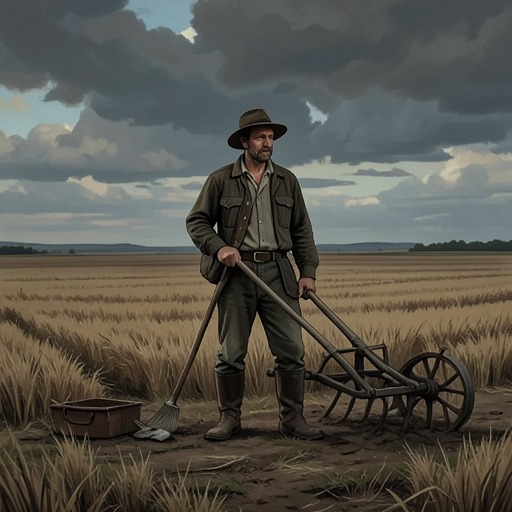
Land division also shaped what a household could pass to the next generation. When Karl Oskar took over Korpamoen, each child received an inheritance share, while Robert and Lydia left theirs as claims against their brother. Karl Oskar’s farm was burdened by mortgage interest and his parents’ reserved rights, which provided them housing, provisions, land, and other support for life. The arrangement met a real obligation to Nils and Märta, but it left the new farmer with little margin when crops or livestock failed. After three years of work, he and Kristina had one fewer cow and seventy riksdaler more debt than when they began; their experience gives the later famine a history of economic strain rather than presenting it as an isolated bad season.
Hunger in the parish
The narrative marks the change from failed harvest to prolonged crisis in blunt seasonal terms: drought and crop failure are followed by winter and famine. The sheriff’s carriage appears repeatedly at the poorest farms, where its long stays suggest the pressure of debts and official claims amid scarcity. Children sent out to beg become the famine’s most visible witnesses. Their parents are ashamed to be seen asking for help, while the children, too young to regard begging as shameful, have few other means of obtaining food. They approach houses timidly and ask for scraps and refuse that can be carried home.
Older people also travel from house to house with wares to sell. When no one buys, they may remain and eventually ask for bread, admitting that they are too weak to continue. The contrast between their attempt to earn a living and their eventual plea shows how hunger can defeat even an honest trade. The parish’s formal poor relief was divided into three groups: those wholly incapacitated could receive as much as three riksdaler and four bushels of barley a year; people partly able to work received smaller sums and at most two bushels; temporary aid came from the parish poor purse. The system also assigned the smallest aid to people it judged responsible for their poverty. Such limited, conditional assistance stands against the scale of need shown in the winter scenes.
The Nilsson household under famine
At Korpamoen, Kristina makes famine bread by stretching rye flour with chaff, beechnuts, heather seed, and dried mountain-ash berries. She tries acorns as well, but the resulting bread brings further physical hardship. Hazelnut kernels become porridge in place of the rye porridge the family cannot afford. These substitutes fill the stomach without providing lasting nourishment, and even when ingredients are stretched, the food stores will run out before another crop can be harvested.
The household grows to eight when Kristina gives birth to a son in midwinter. The family’s meager diet leaves her without enough milk, and the starved cows cannot provide suitable nourishment for the baby. She tries to reserve the most nourishing food for him, yet sees that Anna, the eldest child, has grown thin. Caring for the newborn thus sharpens the scarcity rather than relieving it: Kristina feels that feeding one child means taking food from the others.
Anna’s death brings the household’s deprivation into devastating focus. After the family has saved a little barley grits for the christening, Kristina cooks a richer porridge. Anna eats much of it while the adults are unaware, and the food proves too heavy after a winter of famine fare. The episode is not presented as a simple failure of parental care: the porridge is made from a small remnant of a poor harvest, and Anna’s hunger is part of the same conditions that have already thinned her. At the funeral, Karl Oskar connects his daughter’s death with the starving children he has seen begging. Anna had found good food, but hunger had still claimed her.
From bereavement to emigration
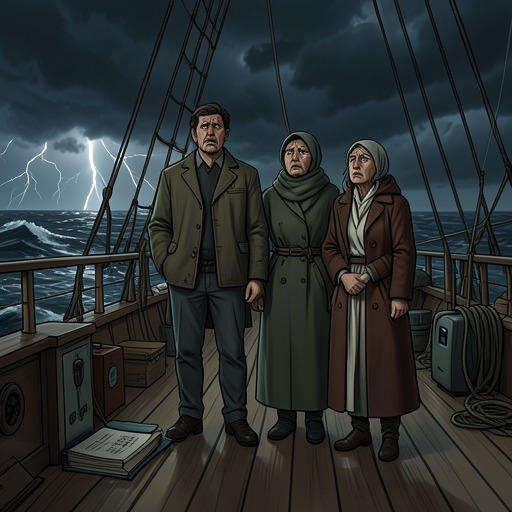
After the funeral, Kristina is overcome by grief and repeatedly wonders whether a different choice about the porridge might have saved Anna. She and Karl Oskar do not speak of their dead daughter for a long time, keeping their loss in silence. A month after the funeral, however, Kristina tells Karl Oskar that she has changed her mind about emigration. She had feared exposing the children to danger at sea; now Anna’s death has shown her that care cannot make them safe on dry land either. If she entrusts the children to God, she believes they may be as safe on the stormy sea as at home.
This change does not erase the risks of the crossing or promise a better outcome. It alters the terms of Kristina’s decision: remaining in Ljuder no longer appears to offer the protection she had hoped to preserve. She agrees to go with Karl Oskar, and the couple decide to seek passage the following spring. The decision determines the course of their lives and the future birthplace of descendants not yet born. In that way, the famine becomes more than a season of failed crops: it is the pressure that turns a long argument about land, work, and family responsibility into a shared departure.